
Live Online Courses
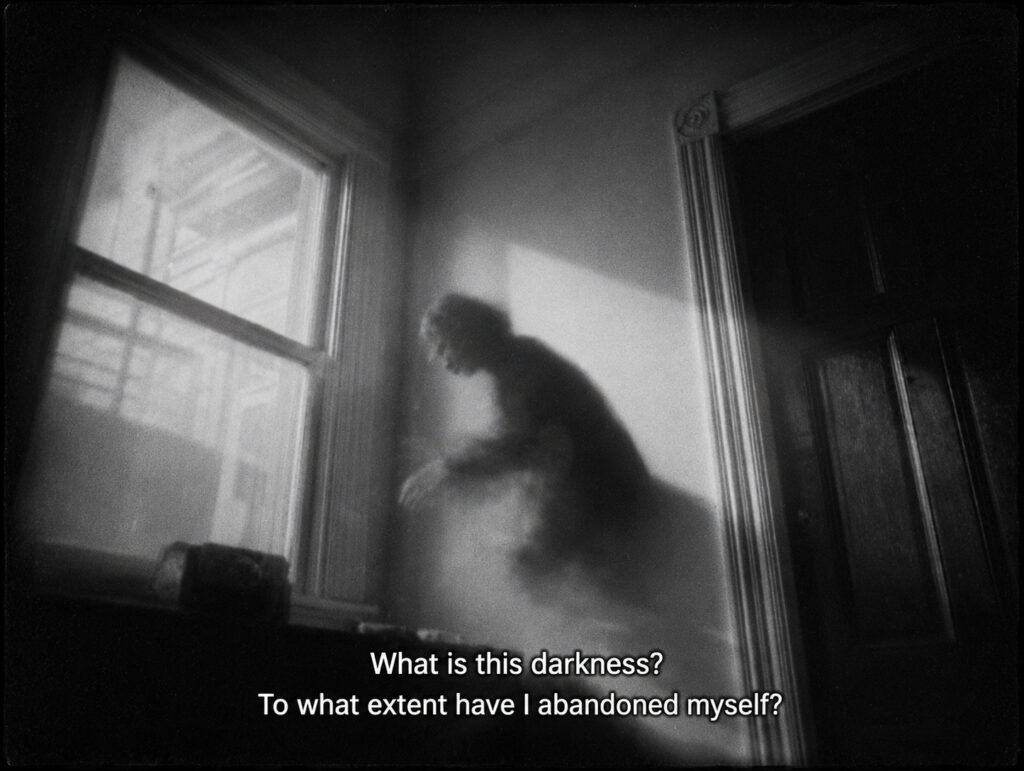
No edition is currently open for registration. Future announcements will appear here.
EFS Film School · Live Online Course · via Zoom
A six-week course in the theory and poetics of personal and experimental cinema — taught live, in real time, by Rouzbeh Rashidi, across six consecutive weekly sessions via Zoom. An entirely theoretical and philosophical study, in which cinema is approached not as a craft to be acquired, but as a mode of perception: a thinking that thinks in light.
- Organiser
- EFS Film School
- Tutor
- Rouzbeh Rashidi
- Format
- Six weekly live sessions, conducted via Zoom conference call
- Duration
- Six weeks
- Sessions
- Sundays, 16:00 – 18:00 (Central European Time, CET)
- Location
- Online, via Zoom
- Dates
- Announced ahead of each edition (currently to be confirmed)
- Tuition
- €300 — a single, one-time payment
- Ages
- 18 and over
- Language
- English (EN-GB)
I.An Invitation
Theories of Personal Experimental Filmmaking is a six-week course conducted over six consecutive sessions — one each week — by live Zoom conference call. It is an entirely theoretical and philosophical study, offering a profound exploration of the rich history of alternative film and video, a diverse range of artist practices, and deeply personalised methodologies. More than this, it equips you with the mental and poetic knowledge required to embark on your own subjective journey toward establishing a distinct experimental film practice.
The programme is composed as a harmonious blend of film viewings, lectures steeped in the lyrical and the philosophical, engaged discussion, and insightful reading. Participants come to understand how filmmakers and artists have harnessed film, video, and digital media to experiment with the moving image — pushing at the boundaries of the medium and at their perception of the world around them. We consider how seminal films and their makers have explored the material and conceptual possibilities of film and video, reshaping our comprehension of what the medium of alternative cinema can truly embody.
II.The Moving Image Today
The course foregrounds the growing importance and relevance of personal and poetic experimental moving-image practice in the world today. It addresses a paradox: the often-overlooked presence of the moving image in modern life, set against the unsettling sociopolitical and audiovisual landscape of the twenty-first century. It underscores the moving image as a personalised memory and perception — subject to constant reconfiguration and renewal — and so fosters a deeper comprehension of its profound significance.
III.Learning Outcomes
The course originates from, and is profoundly influenced by, Rouzbeh Rashidi’s Homo Sapiens Project — an ongoing initiative that represents a bold plunge into filmic experimentation, and a breeding ground for an imaginative cinema. Since its inception in 2000, this unconventional endeavour has passed through numerous radical metamorphoses, moving between systematic progression and deliberate reduction.
Initially a singular experimental platform, it has gradually expanded its reach and significance through its profound and discerning scrutiny of the individual’s existential condition and its intricate interplay with societal limitations. From this foundation, the course aims to produce results both tangible and theoretical. It calls for rigorous research into singular filmmaking practices and techniques, culminating in the production of both individual and collective moving-image works under specialised guidance. This exploration not only deepens the comprehension of experimental filmmaking, but offers direct, hands-on experience in the making of such work — preparing participants with the imaginative skills and knowledge for their future pursuits in this evolving field.
IV.The Artist and the Homo Sapiens Project
Since the turn of the millennium in 2000, Rouzbeh Rashidi has assiduously sculpted a radical approach within the sphere of the experimental moving image. His work plunges into a deeply personal vision, transmuting the everyday spaces and individuals he encounters into a surreal odyssey that expands the limits of cinema’s transformative power. These images mature into personalised memories, serving as custodians of both self-identity and perceived reality.
The Homo Sapiens Project (HSP), a perpetually evolving initiative, is the most steadfast manifestation of this process. This singular film-diary, which began as a laboratory of cinematic forms, has come to bear an uncanny correlation to questions risen to prominence with the present influx of moving images and film production. It accentuates the existential implications of personally generated images — their irreplaceable role in moving through isolation, alienation, and crises of identity, and their capacity to reshape our perception of space, memory, and time.
The project poses a captivating question: how does one sustain a productive filmmaking practice when familiar means of production fall short of eliciting poetic and transcendental sensory experience? The course aspires to magnify and draw out precisely those qualities — concentrating on the lyrical, the ethereal, and the sensory potentials of experimental filmmaking. Rashidi, and HSP, have always perceived filmmaking in this light: as a critical instrument of personal exploration. That ethos, explored and imparted, forms the bedrock of this course.
V.Who It Is For
The course is structured to accommodate a diverse range of participants — artists from many disciplines, filmmakers, creative spirits, and anyone wishing either to acquire an innovative comprehension and a poetic methodology, or to enhance an existing capacity in experimental cinema and artists’ moving-image practice. Participants of every level of experience are warmly welcomed and encouraged.
This is not a course in technique. It delves instead into poetics, philosophy, and intuitive mental strategy, fostering a lifelong journey of living and creating within experimental film practice. Its overarching aim is to cultivate a deeply personal environment, conducive to the crafting of a poetic cinema. The sessions do not encompass instruction in camera operation or editing; in their place, the course puts its confidence in each participant’s intuition and creative ingenuity, working with their own unique means of production.
VI.Teaching Method, Topics, and What You Will Carry Away
Participants refine their methodological, lyrical, and intuitive capacities for articulating themselves through sensory and audiovisual artistic form. The tutor guides each student on a profoundly personal and unconventional level, offering insight into how to forge an individual and distinct experimental film practice, through a sequence of lived experiences and lectures. The student body is a diverse amalgamation of backgrounds and experiences: some are seasoned filmmakers with many films to their name; others may be venturing into cinema for the first time. Whatever their starting point, all learn to reinvent and reimagine themselves and their working methods, setting out toward an intensely poetic vision.
A wealth of reference materials serves as tools for learning and inspiration — films, essays, books, and web-based resources. Participants share their thoughts and concerns as makers, in open dialogue about their projects, themes, and concepts. They gain profound insight into the many critical conversations bearing on the production and distribution of contemporary experimental cinema, and learn to weave these ideas into their own work through practical tasks, enriching their artistic repertoire. The course also offers exclusive access to materials from a series of internationally acclaimed film artists affiliated with the Experimental Film Society.
VII.The Programme — Lectures, Viewings, Discussions, and Readings
Drawing on his long experience in both the practical and theoretical dimensions of filmmaking, Rouzbeh Rashidi has carefully curated an array of performative lectures and interactive screenings and discussions. His passion for exploration and experimentation becomes strikingly evident in the dynamic teaching of these sessions. The lectures open an insightful window onto a continuous, interwoven process of ideation and creation, from which the core principles of cinema organically unravel. Rather than a conclusive statement, they are a momentary capture of an ever-evolving body of work — one that gathers momentum and intensity over time. As Rashidi writes:
“My journey in experimental filmmaking embarked in the landmark year of 2000. From the outset, I was trapped by a singular yet profound notion — the pursuit to decipher the intrinsic essence and relevance of Cinema in this nascent millennium. This unyielding exploration has persistently ignited my aspiration to innovate, experiment, and delve deep into the recesses of my unique filmmaking laboratory. I do not categorise myself as a traditional educator; my identity is profoundly intertwined with being a filmmaker, first and foremost. Nonetheless, I disseminate my distinct viewpoints and methodologies about filmmaking, thereby providing context and augmenting both my creative pursuits and those of others. Furthermore, I derive tremendous satisfaction from crafting complex, poetic, and philosophical dialogues among fellow artists, filmmakers, and myself. Consequently, I am passionately formulating pedagogical strategies that are harmonious with my work and the manner in which I convey my thoughts through the medium of Cinema.”
Film viewing is an integral component of the theoretical part of this programme. A significant portion of the course is devoted to viewing carefully handpicked examples from the rich history of cinema, alongside works produced by Rouzbeh Rashidi and the artists affiliated with the Experimental Film Society. Engaging closely with these films is crucial to a full understanding of the course and to a rewarding learning experience; the screening of a broad spectrum of titles is, for this reason, emphatically encouraged.
VIII.The Six Weeks
IX.Practical Details
- Duration
- Six weeks, one live session per week
- Sessions
- Sundays, 16:00 – 18:00 (Central European Time, CET)
- Delivery
- All classes held via Zoom conference call
- Dates
- Announced ahead of each edition
- Tuition
- €300 — payable as a single, one-time payment
- Ages
- Participants must be 18 or over
- Language
- Conducted in English (EN-GB)